
Key Takeaways
- Understanding FMO release policy options can support smoother career transitions and compliance.
- Choosing the right release approach can impact both your daily workflow and long-term practice growth.
If you’re thinking about changing your FMO, knowing how FMO release policies work is essential. Navigating the release process wisely can help you protect your business and serve Medicare clients confidently. This guide gives you plain-language, compliance-focused insight so you can make decisions with clarity and peace of mind.
What Is an FMO Release Policy?
Definition and core terms
An FMO release policy is a set of guidelines that outlines how an insurance agent can end their relationship with one Field Marketing Organization (FMO) and transfer to another. FMOs are companies that partner with licensed insurance agents, offering access to product portfolios, marketing support, compliance resources, and practice growth strategies. A “release” is the administrative process by which your current FMO formally agrees to terminate or allow the transfer of your contractual relationship, making way for you to join a different FMO.
Some key terms you’ll see include “voluntary release,” referring to the FMO willingly signing off on your departure, and “time-based release,” which is when a release automatically occurs after a required waiting period—usually set by carrier partners rather than the FMO itself.
Purpose for licensed insurance agents
For independent agents, release policies are there to protect all parties involved, including you, your FMO, and any contracted carriers. These policies ensure ethical business practices and maintain accurate records for carrier and compliance oversight. The release process gives you flexibility to grow your practice, access better support, or realign your business, all while safeguarding client interests and your reputation.
How Do FMO Release Processes Work?
Standard steps in a release
While release procedures can vary, most FMOs and carriers follow similar steps.
- Formal Request: You submit a formal request for release (often through email or a standard form) to your current FMO.
- Review and Response: The FMO reviews your request. They may discuss your reasons for leaving, check outstanding obligations, and ensure no compliance issues exist.
- Carrier Notification: Your FMO notifies each applicable carrier of the change to update your contracting status.
- Release Approval: Once all reviews are complete and releases are granted, you’re eligible to start a new relationship with a different FMO.
Timelines will differ based on FMO policy and carrier rules. Some carriers also require waiting periods if the FMO doesn’t grant a release.
Key documentation needed
You’ll usually need to provide:
- Your full name and agent identification numbers.
- The carriers/contracts you wish to transfer.
- A signed release request, often via a specific form or electronic submission.
- Carrier-specific transfer paperwork if needed.
Keeping records organized and accurate will help avoid delays and support compliance throughout the transition.
What Release Options Do Agents Have?
Direct release requests
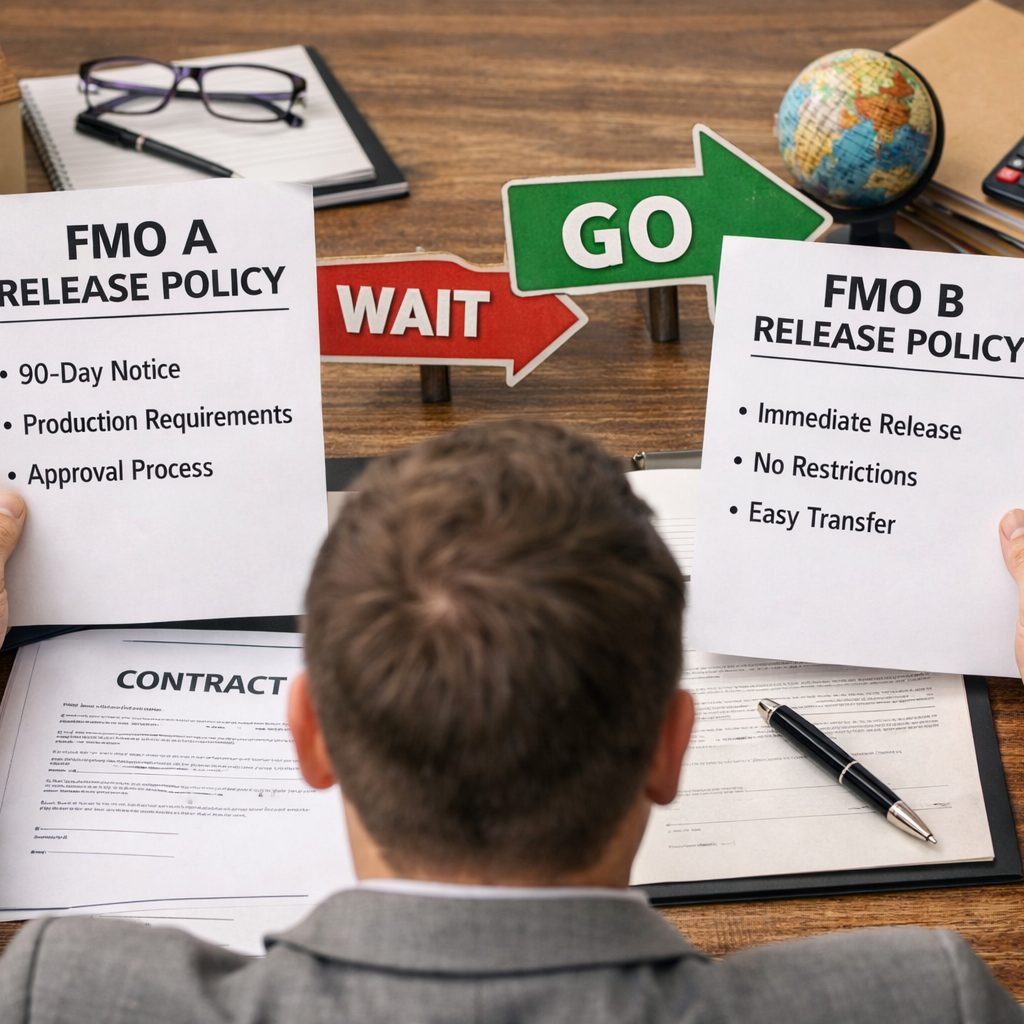
The most straightforward way to switch FMOs is a direct voluntary release. This means you request a release and your FMO grants it, enabling immediate transfer to a new FMO partner. This path is ideal for agents who have met all contractual and compliance responsibilities and have an open line of communication with their FMO.
Waiting period alternatives
If your FMO declines to grant a release, many carriers enforce a waiting period—often six months before you’re allowed to transfer contracts. While waiting, you might be restricted from submitting new business for those carriers. This “passive” release option may affect your income and workflow but is a standard safeguard set by the carrier or FMO contract. Understanding both options helps you plan your transition strategy.
Comparing Key FMO Release Approaches
Voluntary versus time-based releases
A voluntary (immediate) release gives you the most flexibility and can keep your business running without gaps. It shows mutual respect between you and your FMO. On the other hand, time-based releases are often used when there are contract disputes or other unresolved issues, requiring you to wait out a predetermined window before you can be re-contracted under a different FMO.
Common agent experiences
Agents report that clear, proactive communication with your current FMO helps smooth out the release process. Those who plan ahead and meet responsibilities often experience efficient transitions. However, delays usually occur if there are unresolved commission issues, incomplete paperwork, or miscommunications about which carriers are affected by a release.
What Are Common Release Obstacles?
Frequent challenges faced
Agents frequently encounter issues such as:
- Slow response times from FMOs or carriers.
- Misunderstandings about required paperwork or steps.
- Pending commission or compliance matters holding up releases.
- Uncertainty around carrier-specific rules or black-out periods.
Tips for smoother transitions
To make your release experience positive:
- Review your FMO and carrier contracts before requesting a release.
- Communicate your intentions and reasons early and professionally.
- Stay organized with all documents and correspondence.
- Consult with your prospective new FMO for guidance—they often have checklists and support to ensure you meet each carrier’s requirements.
How Can Agents Stay Compliant?
Critical compliance guidelines
Always follow both FMO and carrier policies closely. Avoid contacting Medicare-eligible individuals about switching FMOs until your release and new contracts are fully processed. Keep your marketing and client communications compliant by focusing on education rather than plan or product promotion. Be diligent about recordkeeping and honor any blackout or waiting periods to avoid jeopardizing your eligibility with carriers.
Avoiding release-related pitfalls
Common pitfalls include failing to disclose business changes, submitting business through multiple FMOs in violation of contract terms, or using old marketing materials after switching. Avoid these by keeping all activities, marketing, and communications updated and in line with your current appointment status and carrier rules.
How Does Release Policy Impact Practice Growth?
Practice-building considerations
A transparent, agent-friendly release policy can boost your confidence and flexibility. If you know you can move without complications, you can align your practice with FMOs that match your growth goals, compliance standards, and support resources. This agility helps you respond to shifting market needs and client expectations.
Long-term career implications
Release policies affect your reputation among industry leaders, carriers, and other agents. Staying compliant and navigating releases ethically will open doors to stronger partnerships and ensure you can grow your book of business without interruption. In the long run, your choices about FMO relationships and transitions set the tone for trust with both your clients and professional network.